Stump Grinding vs Stump Removal vs Leaving It: What Each Option Really Means
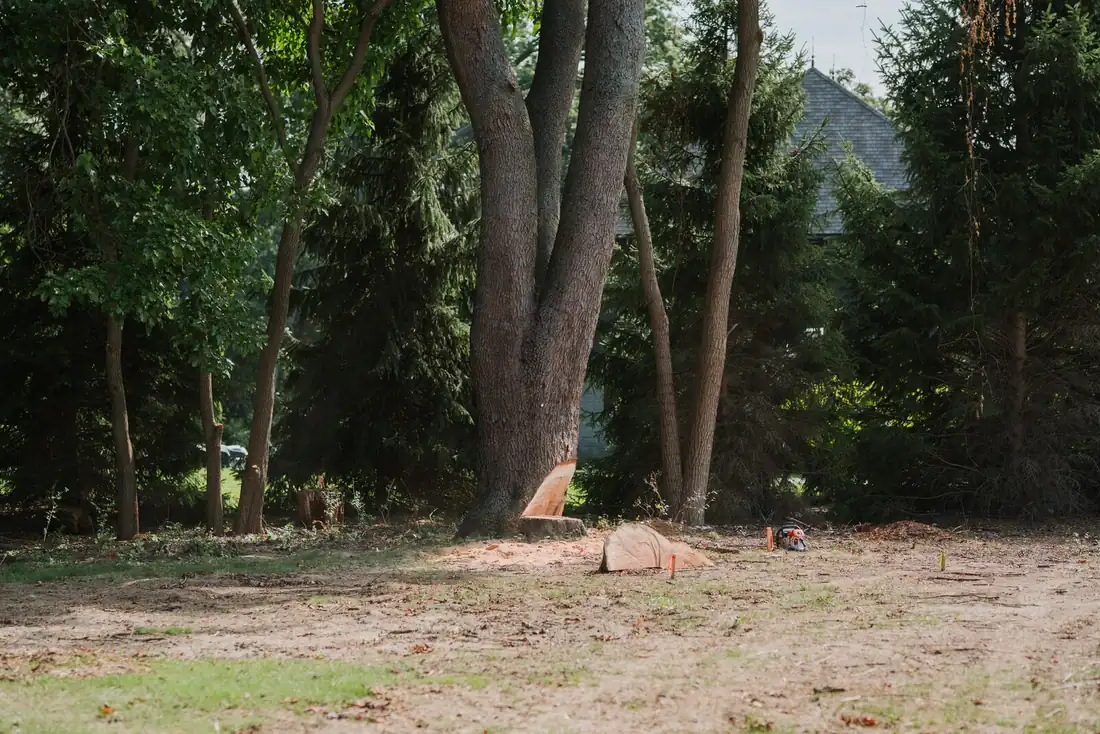
Once a tree is down, the stump is the part that stays with you. Some homeowners grind it right away; some leave it for years. There is a right answer for most yards, and it depends on what you want that spot to be next. This guide explains the three real options, the problems a stump can cause, the Michigan utility rule that applies before anyone grinds, and what to do with the spot afterward.
— Quick Points —
- Grinding chews the stump below the surface. Full removal digs out the root ball. Leaving it is a fine choice in the right spot.
- In Michigan, excavators must notify MISS DIG 811 at least three business days before digging, which is why grinding needs a little lead time.
- Remove most of the grindings, add topsoil, and expect the spot to settle before seeding or replanting.
Three Options, Not Two
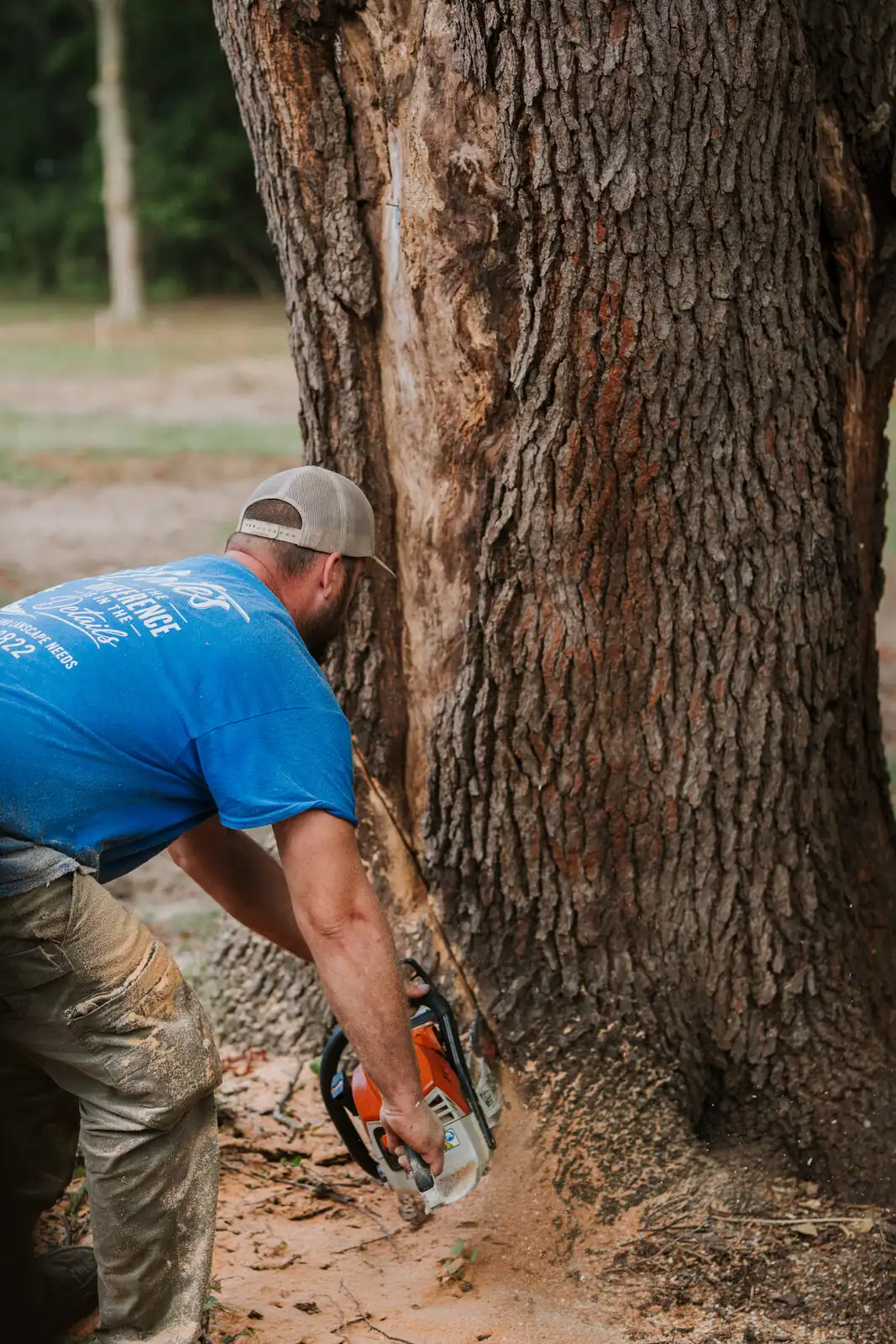
Stump grinding uses a machine with a heavy cutting wheel lined with carbide teeth. The wheel sweeps back and forth across the stump and chews it into a mix of wood chips and soil, usually several inches below grade. The large roots below that depth stay in the ground and decay slowly over time.
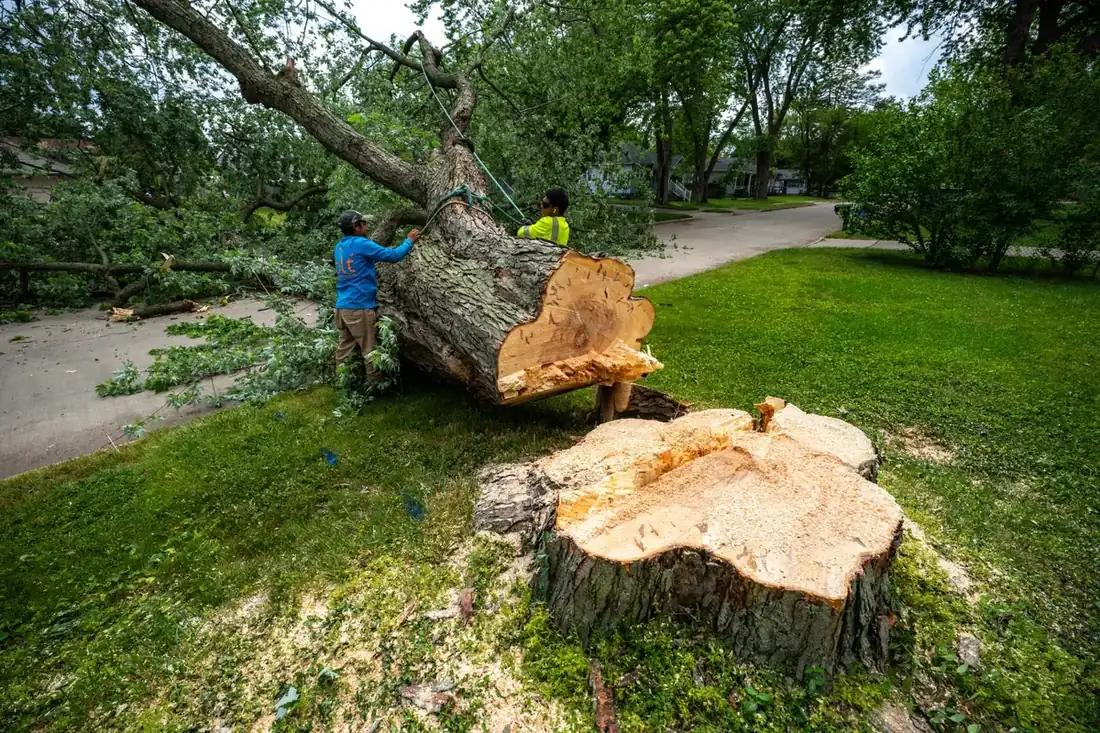
Full stump removal is excavation. The stump and the main root mass are dug or pulled out, leaving a large hole that has to be filled. It takes heavier equipment and disturbs a much bigger area of the yard.
Leaving the stump means exactly that. It will decay on its own over a number of years, faster for softer woods and small stumps, much slower for dense hardwoods like oak.
When Grinding Is the Right Call
For most residential yards, grinding is the practical choice. It removes the trip and mowing hazard, gets rid of the visible stump, and leaves you with ground you can seed, sod, or plant into. It is also far less disruptive than excavation and usually costs less.
Grinding also handles surface roots. If the tree had roots running across the lawn, those can often be ground down along with the stump so the mower does not catch them.
What Grinding Day Looks Like
Most residential stumps are ground in well under an hour once the machine is in place. Compact grinders can fit through many backyard gates, which means the lawn usually sees far less disturbance than it did on the day the tree came down. The crew will keep people and pets back, since the wheel throws chips, and will grind out any large surface roots you want gone at the same visit.
The size of the stump, the species, and how many roots run across the surface affect how long it takes. Very large stumps from old silver maples, cottonwoods, and oaks take longer and produce a surprising pile of grindings, so plan where you want them to go.
When You Need Full Removal Instead
If you are putting something structural where the tree stood, such as a room addition, a garage, an in-ground pool, or a patio or driveway that needs a stable base, the decaying root mass under a ground stump can settle over time. In those cases, the root ball should come out entirely and the hole should be filled and compacted properly. Your builder or excavator will usually tell you if the project requires it.
When Leaving It Is Perfectly Fine
A stump at the back of a wooded lot, in a natural area, or somewhere you never mow does not need to be ground. It will provide habitat as it breaks down, and some homeowners turn a stump into a planter or a seat. If it is not in the way and not causing any of the problems below, leaving it is a reasonable decision.
The Problems a Stump Can Cause
Sprouts. Many hardwoods keep dormant buds at the base of the trunk where it meets the roots, and those buds can push out new shoots after the tree is cut. Penn State Extension notes that hardwoods in general can stump sprout, with sprouting typically strongest in younger trees. Maples, willows, cottonwoods, box elders, and lindens are common offenders in local yards. Those shoots have to be cut back again and again until the roots run out of energy.
Decay fungi. Stumps are food for wood-decay fungi, including the honey mushroom, which causes root rot. A decaying stump near other trees is not an automatic threat, but it is one more reason to grind stumps near trees you want to keep.
Insects and hazards. Decaying stumps attract carpenter ants and other insects, and a stump hidden in tall grass is a trip hazard and a mower-blade breaker.
Before Anyone Grinds: MISS DIG and Private Lines
Grinding goes below the surface, and in Michigan that matters. Under the state's damage-prevention law, anyone excavating must notify MISS DIG 811 at least three business days before starting, so utilities can mark buried gas, electric, and communication lines. That is why a stump grinding appointment usually needs a few days of lead time.
MISS DIG marks public utility lines, not the ones you installed. Sprinkler lines, low-voltage landscape lighting, invisible dog fences, and wiring to a shed or detached garage are private, and you are the only one who knows where they run. Point them out before the grinder starts.
After the Grind: Getting Grass Back
Grinding leaves a mound of wood chips mixed with soil. Rake most of it out and use it as mulch elsewhere. Wood chips left in the hole break down slowly and tie up nitrogen while they do, which is why grass seeded straight into fresh grindings often comes in thin and yellow.
Fill the spot with topsoil, slightly mounded, water it to settle it, and top it up again after a week or two. The old roots below will keep decaying for years, so a small amount of settling over time is normal. For seeding, late summer into early fall is the most reliable window in Michigan.
Planting a New Tree in the Same Spot
It is tempting to put the new tree exactly where the old one stood. It is better to shift it several feet over. The ground directly over the old stump is full of decaying roots, will keep settling, and is harder for new roots to grow through. Our guide to the best trees to plant in Southeast Michigan covers what to choose.
What About Chemicals or Burning?
Stump-removal chemicals sold at hardware stores speed up decay, but they still take months and you are left with a soft, rotting stump to dig out. Burning a stump is slow, smoky, and restricted or prohibited by many cities in our area. Check your local ordinance before you try it, and consider that a grinder does the same job in a fraction of the time.
Schedule Stump Grinding
We grind stumps on their own or as part of a removal, and we will tell you honestly if yours is one you can leave. We handle the MISS DIG request and leave the area cleaned up and ready for topsoil.
Free estimates across Livonia and all of Southeast Michigan. Call (734) 788-8822.
— Related Services —
— Keep Reading —