Landscaping Around Trees: The Do's and Don'ts That Keep Mature Trees Alive
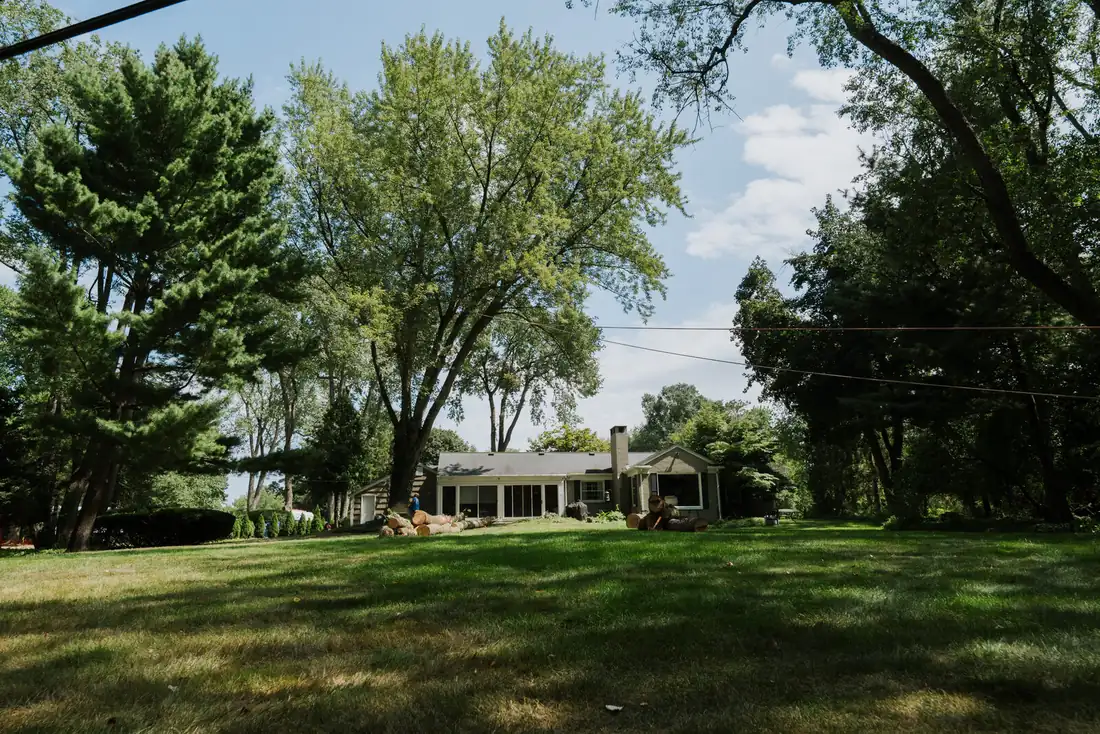
A new bed around a big shade tree, a patio in its shade, lighting along the drive: these are some of the best-looking upgrades a yard can get. They are also some of the most common ways mature trees get killed. The damage is slow. A tree whose roots were buried or cut during a project often looks fine for a season or two, then starts thinning at the top, and by the time anyone connects the two, it cannot be undone. Here is what actually protects a tree when you landscape around it.
— Quick Points —
- Most of a tree's roots are in the top 18 inches of soil and spread far beyond the branches.
- A mature tree can generally tolerate only 2 to 4 inches of added soil over its roots. More can slowly suffocate it.
- Mulch 2 to 3 inches deep in a wide ring, pulled back from the trunk. Never pile it against the bark.
Where the Roots Actually Are
Most people picture tree roots as a mirror image of the branches, reaching deep underground. They are not. Oregon State University Extension notes that most of a tree's roots are within the top 18 inches of soil, and they spread wide, often well past the edge of the canopy.
Arborists use a simple rule to estimate the area that matters most, called the critical root zone: one foot of radius from the trunk for every inch of trunk diameter, measured at chest height. A tree with a 20-inch trunk has a critical root zone about 20 feet out in every direction. That zone holds the large majority of the root mass, and it is where landscaping decisions make or break the tree.
Don't: Add Soil Over the Roots
Roots need air as much as water. Burying them under new soil cuts off that air. Extension guidance puts the limit at about 2 to 4 inches of fill over the roots of a mature tree. Beyond that, roots slowly suffocate.
This comes up constantly: a raised bed built in a ring around the trunk, a low spot filled in to fix drainage, a regrade for a new patio. The symptoms appear years later as small, pale leaves, a burst of sprouts along the trunk, and twig dieback at the top. By then there is very little anyone can do. If a project needs a grade change, plan it outside the critical root zone.
Don't: Trench Through the Root Zone
A single trench for irrigation, lighting, a dog fence, or a new utility line can sever a large share of a tree's roots on that side, which affects both its health and its stability in a storm. Construction guidance for protecting trees recommends boring or tunneling under the root zone, at least 18 inches deep, rather than open trenching across it.
If a line has to come near a tree, route it along the outer edge of the root zone, or bore underneath. It usually costs a little more up front and a lot less than removing a large dead tree later.
Don't: Pave, Park, or Compact
Soil compaction squeezes out the air spaces roots depend on. Heavy clay soils, common in much of our area, compact easily and recover slowly. A patio base, a parking pad, a stack of pavers left under the tree for a month, or a skid steer driving back and forth across the root zone can all do lasting damage.
During any project, fence off as much of the root zone as possible. Where equipment must cross, lay down a thick layer of wood chips with plywood on top to spread the weight.
Do: Mulch the Right Way
A wide ring of wood chip mulch is one of the best things you can give a tree. It holds moisture, moderates soil temperature, keeps mowers and string trimmers off the bark, and replaces competition from turf grass. Keep it 2 to 3 inches deep and as wide as you can manage.
Pull the mulch back a few inches from the trunk so you can see the flare where the trunk widens into the roots. Piling mulch against the bark in a volcano shape keeps the bark wet, invites decay and rodents, and can encourage roots to circle the trunk.
Do: Plant Small Under Big Trees
If you want plants beneath a mature tree, choose shade-tolerant perennials and ground covers and plant them from small pots or plugs. Small holes dug with a hand trowel cut very few roots. Large shrubs with big root balls need big holes, and big holes cut big roots.
Do not rototill under a tree to prepare a bed. Tilling shreds the fine feeder roots in the top few inches of soil, which are the ones doing most of the work.
Do: Water for the Tree, Not Just the Lawn
Lawn irrigation tends to be frequent and shallow. Trees do better with less frequent, deeper watering that reaches down into the root zone. Keep sprinkler heads from spraying the trunk directly, which keeps the bark constantly wet. In a dry late summer, a slow soak over the root zone every week or two does more for a mature tree than daily lawn cycles.
Watch the Species
Oaks are especially sensitive to root damage and soil changes. They also carry a Michigan-specific concern: oak wilt spreads through fresh wounds, and the high-risk period runs from April 15 to July 15. Root and trunk wounds from equipment count. Schedule digging near oaks outside that window whenever possible.
Black walnut, common in older Southeast Michigan neighborhoods, releases a compound called juglone from its roots that many plants cannot tolerate. Tomatoes and many common garden plants wilt under walnuts. Check a plant's walnut tolerance before planting beneath one.
Edging, Stone, and Fabric
Steel or plastic edging driven into the ground cuts the roots it crosses. Landscape fabric covered in stone keeps water and air from reaching the soil, and stone around a trunk holds heat. Organic mulch is almost always the better choice around trees.
Plan the Landscape Around the Tree
The best time to think about a tree is before the landscape plan is drawn. If a big tree is declining, it is far cheaper and cleaner to remove it before new beds, lighting, and hardscape go in than to bring equipment across a finished yard later. If it is healthy, the design can protect it.
We handle both the tree work and landscape design, so we can look at the tree and the plan together. Free estimates across Livonia and all of Southeast Michigan. Call (734) 788-8822.
— Related Services —
— Keep Reading —