How to Tell If a Tree Is Dead (or Just Dormant): Six Checks You Can Do Yourself
From the kitchen window, a dormant tree in March and a dead tree in March look exactly the same. Trees also rarely die all at once. They die from the top down, or one side at a time, or from the roots up while the canopy still looks mostly fine. The good news is that most of the answer is available to anyone with a thumbnail, a pair of binoculars, and fifteen minutes. Here are the checks we run ourselves, what a dead tree around here usually died from, and why some dead trees can wait for winter while others should not.
— Quick Points —
- Scrape a twig: bright green and moist underneath means that part of the tree is alive. Brown and dry means it is not.
- A tree can be partly dead. A dead top or a dead side is still a falling hazard, even if the rest leafs out.
- Dead ash trees lose strength faster than they look. Decay in the outer wood starts early and is hard to see, which makes them risky to climb.
Dead, Dormant, or Declining?
There are three conditions worth separating. A dormant tree is alive and resting. Its buds are plump, its twigs bend, and it will leaf out on its own schedule. A declining tree is alive but losing ground: thinner leaves every year, dead branches at the top, leaves that come out small or yellow and drop early. A dead tree, or a dead section of one, has no living tissue left under the bark.
Timing matters. In Southeast Michigan most trees are fully leafed out by late May, and oaks and a few others are later than maples. A tree that is bare in April is not news. A tree, or a big limb, that is still bare in mid-June is. If you are checking in winter, skip the canopy and go straight to the twig, bud, and bark checks below.
Check 1: The Scratch Test
Just under the bark is a thin layer called the cambium. It is the part of the tree that is actually growing, and when it is alive it is green and moist. Use a thumbnail or a pocketknife to scrape a small strip of bark off a twig about the thickness of a pencil. Bright green underneath means that twig is alive. Brown, tan, or dry means it is dead.
Do not stop at one twig. Test branches on at least two sides of the tree, a few low ones and a few you can reach from a step stool, and one spot low on the trunk. Because trees usually die from the top and the outside in, it is common to find dead twigs up high and green tissue on the trunk. That is a tree in decline, not a dead one, and it is often the stage where a decision still matters.
Check 2: The Bend Test and the Buds
Living twigs bend. Dead twigs snap with a dry click. Bend a few small twigs gently in a U shape. If they flex and spring back, they are alive. If they break cleanly and are dry in the center, they are not.
Then look closely at the buds, the small bumps at the tips and along the twigs where next year's leaves are waiting. Healthy buds are firm and a little plump, and when you slice one in half it is green or pale inside. Dead buds are shriveled, dry, and brown, and they crumble. In winter, the bud check is the single most useful thing you can do.
Check 3: Bark That Is Letting Go
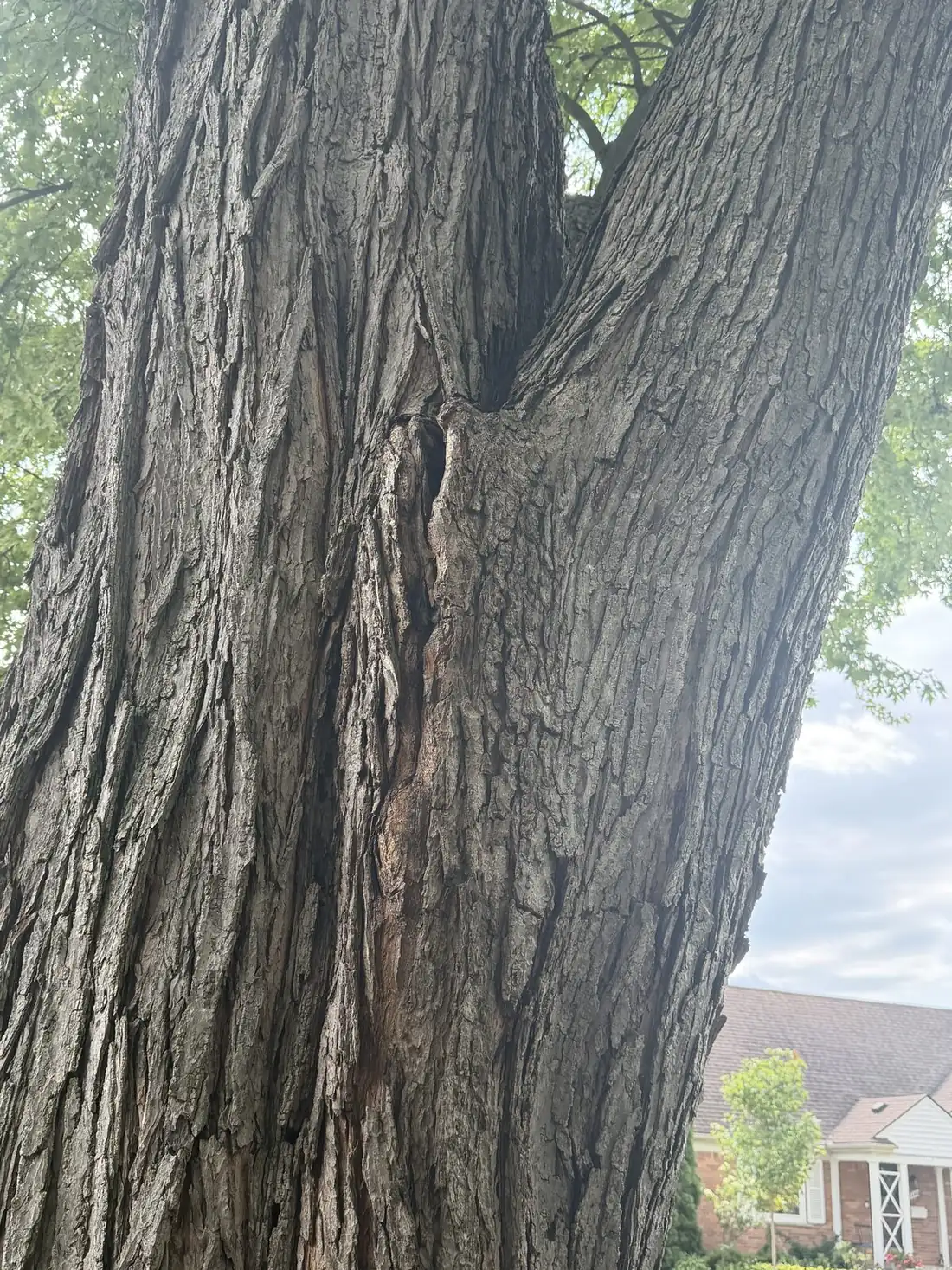
Bark falling off in sheets, exposing smooth, bare wood underneath, is a strong sign that the section behind it is dead. So are long vertical cracks, sunken or discolored patches, and bark that sounds hollow when you knock on it.
Be careful not to confuse normal shedding with death. Sycamore, shagbark hickory, river birch, and older silver maples all peel or flake as part of how they grow. The difference is what is underneath: normal shedding reveals fresh bark, while dead bark reveals bare wood, fungus, or insect tunnels.
On ash trees, look for pale, flecked patches where woodpeckers have stripped the outer bark to reach emerald ash borer larvae, and for small D-shaped exit holes about an eighth of an inch across. Our post on the four pests killing Southeast Michigan trees covers what those signs look like in more detail.
Check 4: Fungus on the Trunk or Roots
A mushroom in the mulch bed is usually harmless. A mushroom growing out of the trunk, the root flare, or a big root is different. Shelf-shaped growths called conks are the fruiting bodies of wood-decay fungi, and by the time a conk appears, the fungus has typically been working inside the wood for a long while.
Clusters of honey-colored mushrooms at the base of a tree in the fall are a warning sign of root rot. Root decay is the kind that matters most for safety, because a tree with rotted roots can look full and green right up until it tips over in a wind.
Check 5: The Canopy From Across the Street
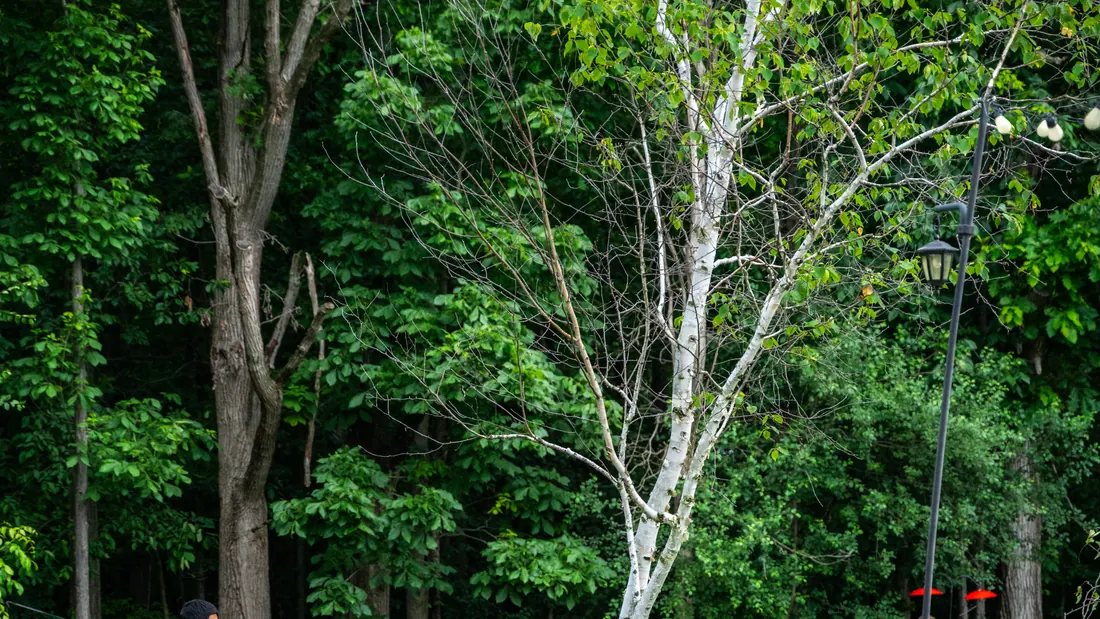
Step back far enough to see the whole crown and compare it to another tree of the same kind nearby. Signs of trouble include a bare, antler-shaped top with leaves only lower down, leaves noticeably smaller or paler than the neighbor's, a canopy you can see sky through that you could not see through a few years ago, and leaves wilting or dropping in midsummer.
That last one deserves a note. Red oaks that suddenly wilt and drop leaves in July, with leaves turning bronze from the tips inward, can be showing oak wilt. That disease moves fast and spreads to neighboring oaks through connected roots, so it is worth a professional look quickly rather than a wait-and-see summer.
Check 6: The Base and the Ground Around It
Walk around the trunk and look down. Cavities at the base, soft or crumbly wood, fine sawdust piled at the foot of the tree, and large carpenter ant activity all point to internal decay. So do roots that are cracked, lifted, or decayed where they leave the trunk.
A new lean is the most urgent sign on this list. A tree that has grown at an angle for thirty years is usually stable. A tree that was straight last month and leans now, especially with soil cracked or heaved on the side opposite the lean, is moving. Treat that as an emergency, keep people and cars out of the fall zone, and call.
Which Dead Trees Cannot Wait
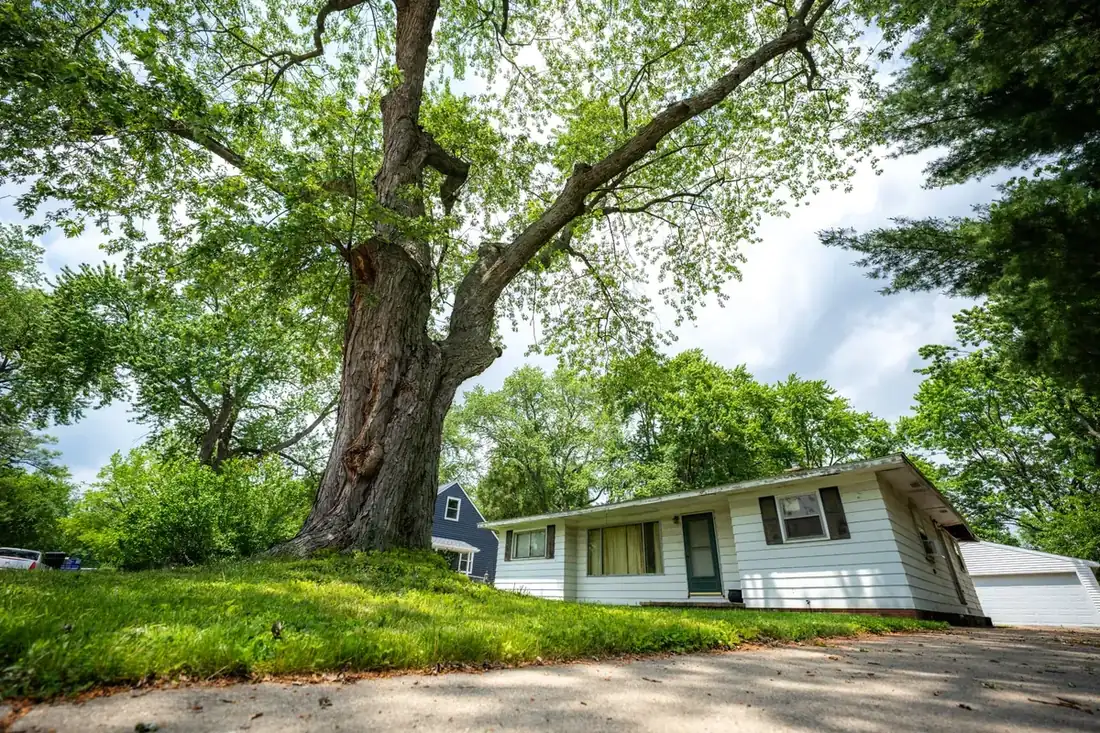
Not every dead tree is an emergency. The question is what it can hit. A simple rule of thumb: if the tree is taller than its distance to your house, garage, driveway, a neighbor's property, a play area, a sidewalk, or a power line, it has a target, and it should be dealt with sooner rather than later.
Dead ash trees move to the top of the list. Tree care industry research has found that the fungi that move into ash after emerald ash borer attack cause relatively rapid strength loss in the outer sapwood, often before decay is visible. In practice, that means dead ash drops limbs and snaps unpredictably, and after a point it is no longer safe for anyone to climb. Removing it then takes a bucket truck or lift instead of a climber, which usually adds cost. Waiting rarely makes a dead ash cheaper.
A dead tree at the back of a large lot, well away from anything it could hit, is a different story. Standing dead trees are valuable habitat for woodpeckers and other wildlife, and leaving one is a legitimate choice. We are happy to tell you when that is a reasonable option.
What Not to Do
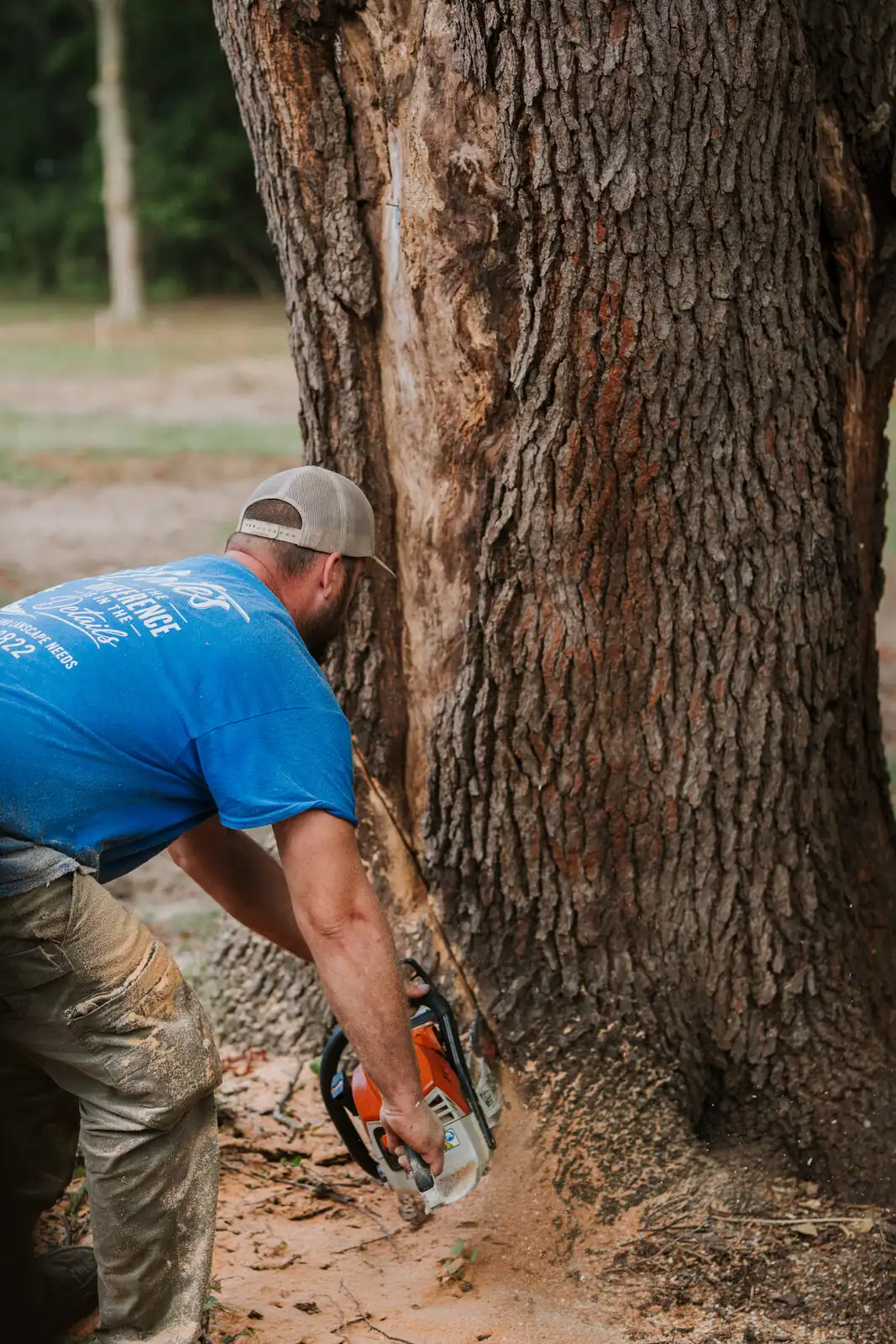
Do not climb a dead or dying tree, and do not put a ladder against one. Do not try to fell a dead tree yourself if it is taller than its distance to anything you care about. Dead wood does not hinge the way live wood does, so trees fall faster and in directions that are hard to predict.
Do not pour fertilizer on a declining tree hoping to revive it. A stressed tree usually needs the cause identified, not a feeding. And if the tree is an oak, do not prune or wound it between April 15 and July 15, which is when oak wilt spreads most easily in Michigan.
Not Sure? Let Us Take a Look
If you have run these checks and the answer is clearly dead, or you simply cannot tell, we will come out and look. We will tell you honestly whether the tree is dead, declining, or fine; whether it has a target; and, if it needs to come down, whether it can wait for frozen ground in winter or should come down now.
Free estimates across Livonia and all of Southeast Michigan. Call (734) 788-8822.
— Related Services —
— Keep Reading —