How to Hire a Tree Service in Michigan: What to Check First
Tree work is one of the few home services where a bad hire can damage your house, injure someone on your property, or kill the tree you were trying to save. It is also a trade where almost anyone with a chainsaw and a pickup can print business cards. That combination is why it pays to spend twenty minutes checking before you sign anything. This is the checklist we would want a family member to use, drawn from guidance published by the Michigan DNR, the Michigan Attorney General, the Better Business Bureau, and the tree care industry's own organizations. Use it on us too.
— Quick Points —
- The Michigan DNR advises confirming a company carries both general liability and workers' compensation insurance, and getting quotes from two to three arborists.
- Get at least three written estimates and compare the scope of work, not just the bottom-line price.
- Be wary of door-to-door offers after storms, demands for cash or full payment up front, and anyone who recommends topping or climbs with spikes to prune.
Insurance Comes First
Start here, because it protects you more than anything else on the list. The Michigan DNR's tree removal resources tell homeowners to confirm that a tree service carries two types of insurance: general liability and workers' compensation. The Better Business Bureau puts it plainly: your homeowner's insurance is not enough to protect you if someone gets injured doing tree work on your property.
General liability covers damage to your property or a neighbor's, like a limb through a roof or a crushed fence. Workers' compensation covers the crew if someone gets hurt. Tree work is dangerous, and an uninsured injury on your property can become your problem. Check your own policy and talk to your agent if you are unsure how it would apply.
Do not settle for a company saying they are insured. Ask for a certificate of insurance. Go a step further and call the insurance company to confirm the policy is active. You can also ask the company's agent to send the certificate to you directly, so you know it is current.
Licenses: What Michigan Does and Does Not Require
This part confuses a lot of people. As far as we can find, Michigan does not issue a general state license for tree trimming and removal, so there is usually no single state license number to look up for a tree service the way there is for a residential builder or an electrician. That makes the other checks on this list more important, not less.
Some specific work does carry state requirements. Applying pesticides or other chemical treatments to trees for hire generally requires certification through the Michigan Department of Agriculture and Rural Development, so if a company is offering to treat an ash for emerald ash borer or spray for insects, ask about that.
Local rules vary. Some cities require a permit before anyone works on a city-owned street tree. Ann Arbor, for example, requires a street tree permit for removal, trimming, or stump grinding on trees in the city right-of-way. Some communities also require contractor registration or specific permits for right-of-way work. Your city's building or forestry department can tell you what applies where you live.
Ask About Industry Standards
Ask whether a company follows ANSI standards. ANSI A300 is the industry standard for tree care practices like pruning, and ANSI Z133 covers safety. A company that knows those standards can explain what kind of pruning they plan to do and why. Our post on common pruning mistakes covers what good pruning looks like.
Get Written Estimates and Compare Them
The Michigan DNR suggests getting quotes from two to three arborists, and the BBB recommends at least three written estimates. Written matters. A verbal price leaves room for disagreement about what was included.
A good estimate spells out which trees are being worked on, what exactly is being done to each one, and what happens afterward. Does the price include hauling the wood and brush, or will the logs be left in the yard? Is stump grinding included, and how deep? Who is responsible for any damage to the lawn from equipment? The BBB also recommends a signed contract before work starts, covering dates, exact cost, the specific work, how your property will be protected, and cleanup.
When you compare, compare scopes, not just totals. Do not automatically take the lowest bid. The low number is sometimes low because the job described is smaller, the insurance is missing, or the cleanup is not included.
Red Flags to Walk Away From
Door knockers after storms are the classic warning sign. Be wary of anyone going door to door offering bargains. The Michigan Attorney General issues post-storm alerts regularly, and the message is consistent: be cautious of anyone pressuring you to accept help right now, and remember that legitimate contractors understand you need time to check them out before you pay or sign anything.
Payment terms are another tell. The Attorney General's advice is to never pay in cash and never pay in full up front, and to consider a credit card for added protection. The BBB similarly warns against making a large payment or deposit up front. A company that insists on cash only, or wants most of the money before starting, is asking you to carry all the risk.
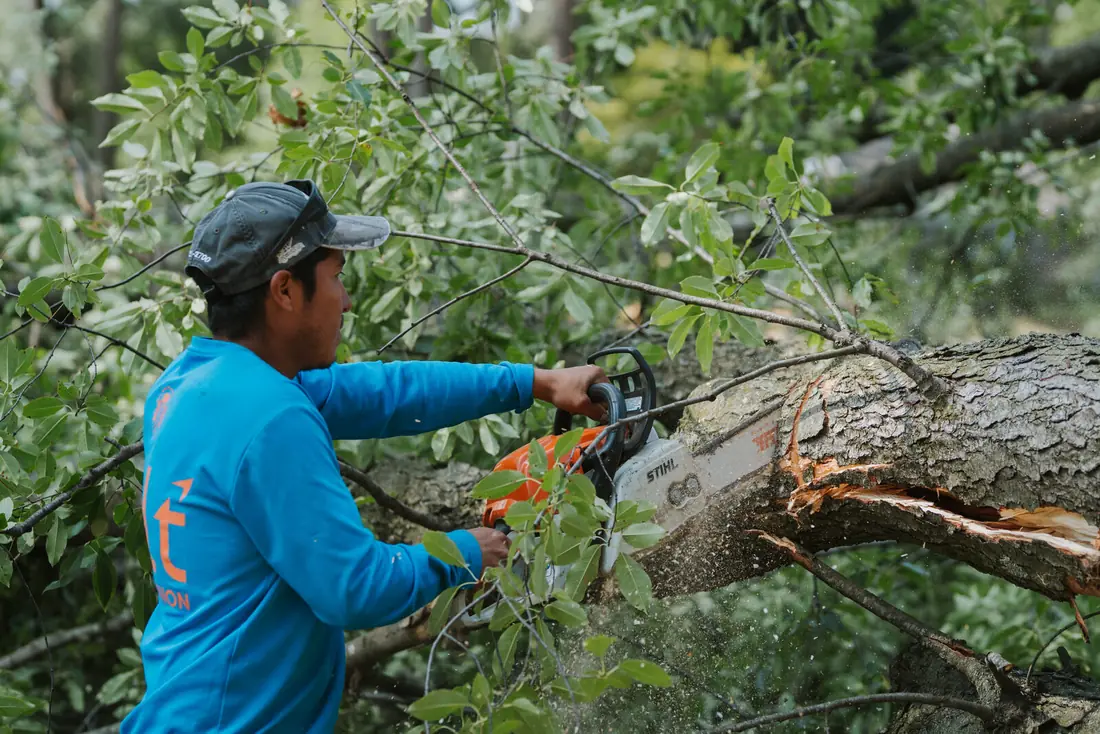
Then there are practices that signal the crew does not know trees. The BBB warns against companies that recommend topping or lion-tailing, or that use climbing spikes to prune a tree. Spikes wound a living tree and are only appropriate when the tree is being removed. Topping, cutting a tree's main stems back to stubs, weakens the tree and invites decay. If an estimate recommends topping, get another estimate.
Questions to Ask Before You Sign
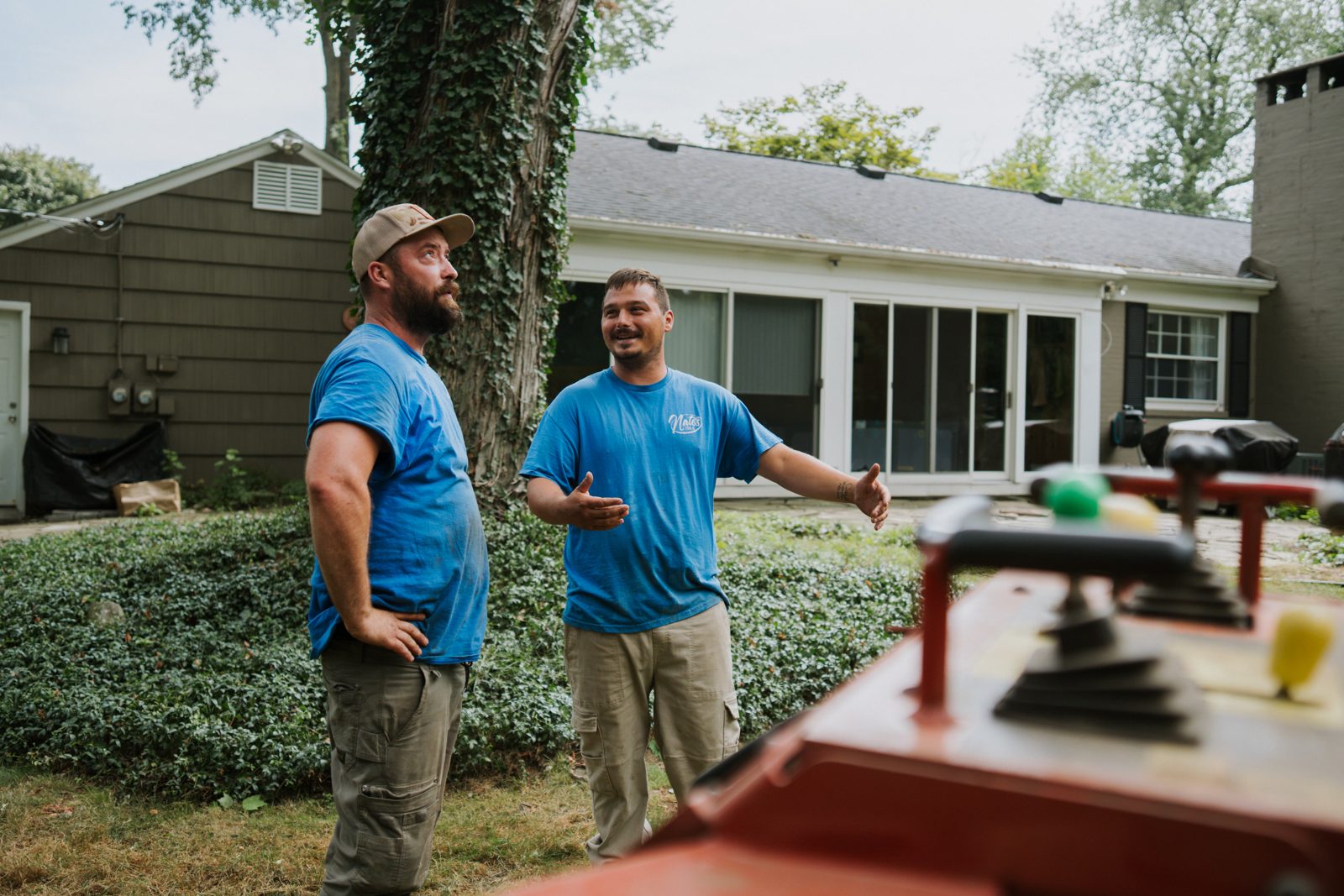
Can you send your certificate of insurance for general liability and workers' compensation? Who will be on site, and who is supervising the work? Do you follow ANSI A300 pruning standards?
What exactly is included in the price, including wood, brush, and stump grinding? How will you protect the lawn, driveway, and landscaping, and who pays if something is damaged? When will the work happen, and how long will it take? Can you give me references from recent jobs? TCIA also suggests checking references and the quality of previous work, and the Michigan DNR recommends checking with the Better Business Bureau.
For more on how a job actually runs once it is booked, see our post on what to expect on tree removal day.
Who Handles Permits, MISS DIG, and Cleanup
Get these answered in writing, because each one can become your problem if nobody owns it. Permits first. Many Southeast Michigan communities regulate removal of certain trees, and work on a city street tree typically needs city approval. Ask whether the company will check and pull any permit needed, or whether that is on you.
Stump grinding counts as digging. Michigan law requires a MISS DIG 811 notice at least three business days before excavation, and the service is free. Ask whether the company will file the ticket. Also ask how they handle work near overhead lines. Trees tangled in power lines are a specialty job, and the first call is to DTE or your utility. If a tree has come down on a line, stay away from it.
Finally, cleanup. Agree on what the yard looks like when the crew leaves: brush chipped and hauled, wood cut to length or removed, sawdust raked, driveway blown off.
After a Storm, Slow Down
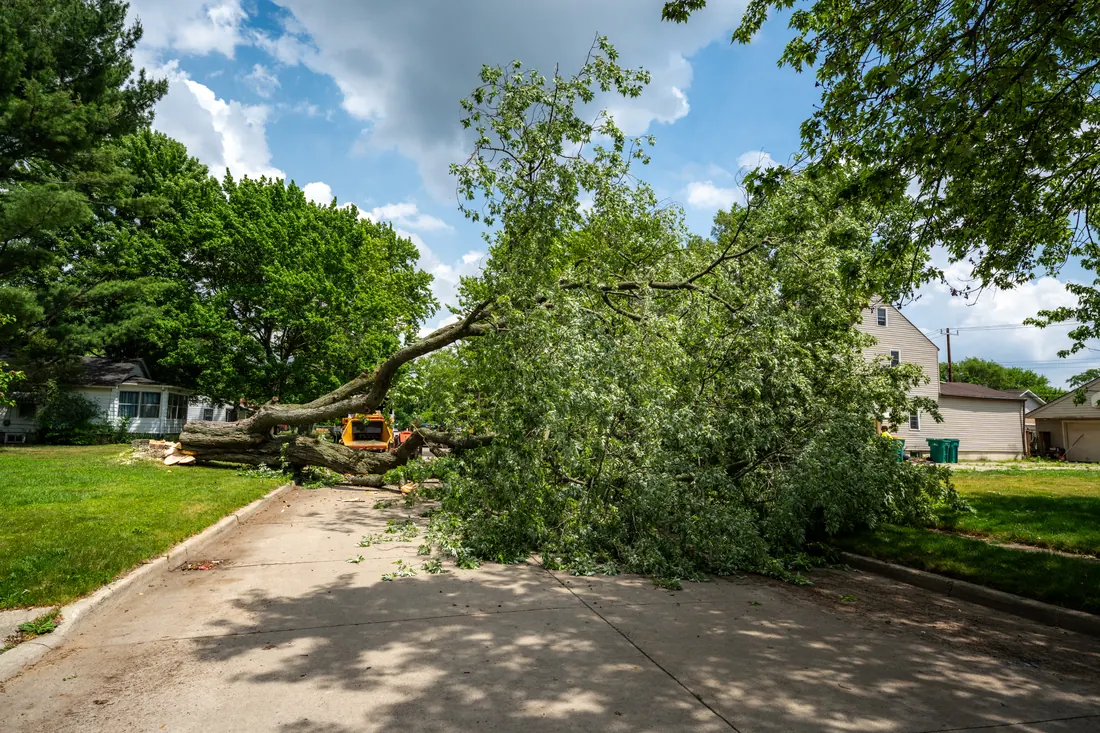
Storms are when people hire in a hurry, and when most bad hires happen. The Attorney General advises contacting your homeowner's insurance before hiring anyone, reviewing what your policy covers, and documenting communications with your insurer and contractors. If a tree is on the house or blocking the only way out, get it made safe, but you can still ask for a certificate of insurance and a written price before anyone starts. Our post on what to do when a tree falls on your house covers the first hour.
For true emergencies, our 24-hour emergency storm work crew can respond. The same questions still apply to us.
Ready to Compare Estimates?
Call us for one of your quotes. Ask us every question on this list, and we will put the scope, cleanup, and price in writing so you can compare it side by side. Free estimates across Livonia and all of Southeast Michigan. Call (734) 788-8822.
— Related Services —
— Keep Reading —