Nine Pruning Mistakes That Hurt Trees (and What to Do Instead)
A tree does not heal a pruning cut the way skin heals. It seals it off and grows over it, and how well that works depends almost entirely on where and how the cut was made. That is why a well-meant afternoon with a saw can leave a tree weaker than it started, sometimes in ways that do not show for years. These are the mistakes we see most often on residential trees in Southeast Michigan, what each one does to the tree, and what to do instead.
— Quick Points —
- Cut just outside the branch collar, the slightly swollen ring where a branch meets the trunk. Never flush, never a long stub.
- Use the three-cut method on any limb heavy enough to tear bark on the way down.
- Never prune or wound an oak in Michigan between April 15 and July 15.
Mistake 1: Topping the Tree
Topping means cutting the main branches back to stubs to make a tall tree shorter. It is the most damaging thing that regularly happens to residential trees. The large cuts cannot seal properly and decay moves in. The tree responds by pushing out a dense crop of fast, upright sprouts from just below each cut. Those sprouts are weakly attached, grow quickly, and within a few years the tree is nearly as tall as before, now with rotting stubs holding up heavy, poorly anchored limbs.
What to do instead: if a tree is too big for its space, a proper crown reduction shortens branches back to a living lateral branch large enough to take over. It is more careful work, but it keeps the tree's structure intact. If a tree truly cannot fit its space, removing it and planting a better-sized tree is usually the more honest answer.
Mistake 2: Flush Cuts and Long Stubs
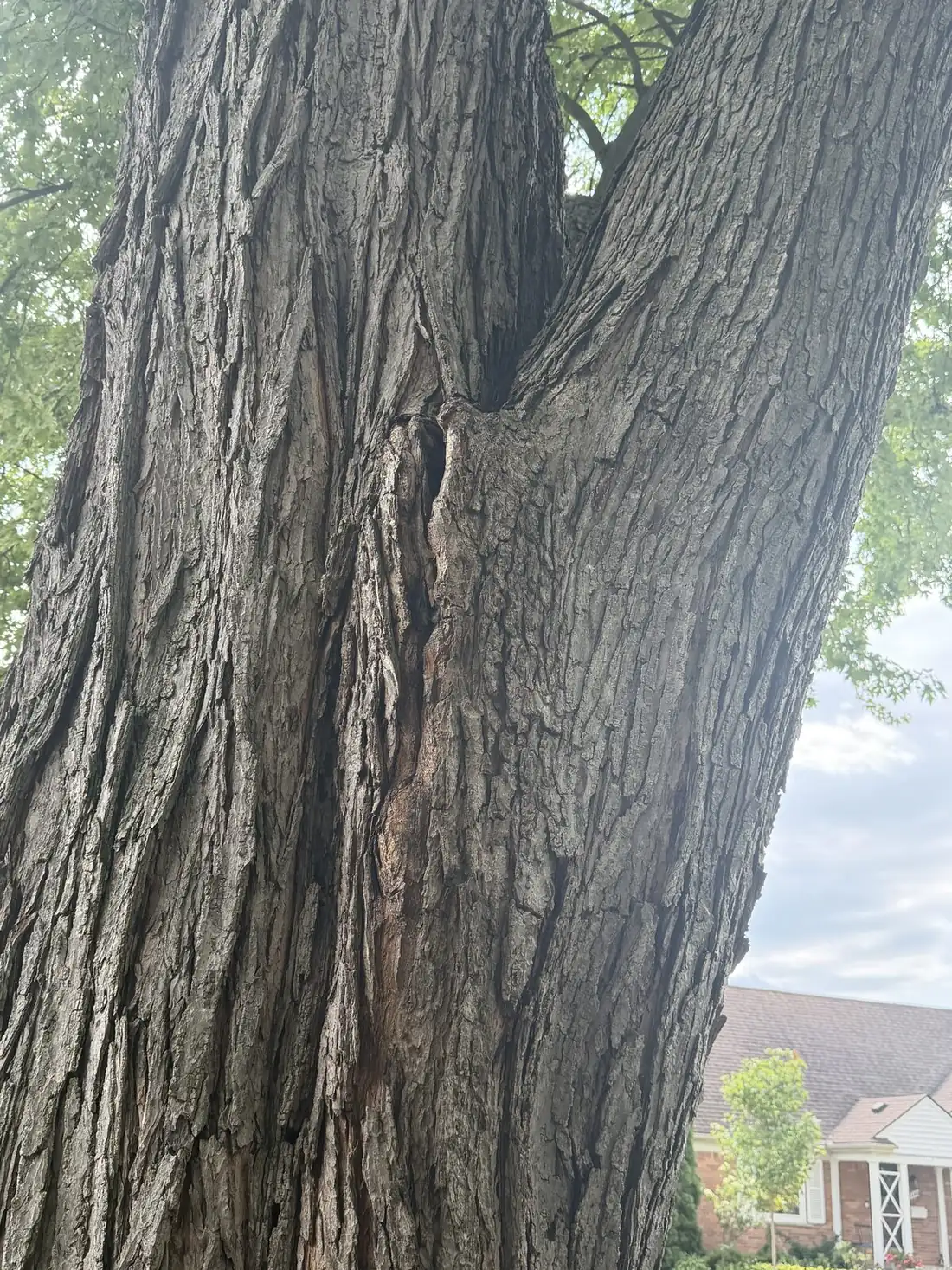
Where a branch joins the trunk there is a slightly swollen ring of tissue called the branch collar. That collar is what seals the wound. Cutting flush against the trunk removes it and leaves a large wound that is prone to decay, which is why the Morton Arboretum specifically warns against flush cuts. Leaving a long stub is the opposite mistake: the stub dies back and becomes an entry point for decay.
What to do instead: make the final cut just outside the collar, following its angle. The cut should be clean, with no torn bark.
Mistake 3: Letting the Branch Tear the Bark
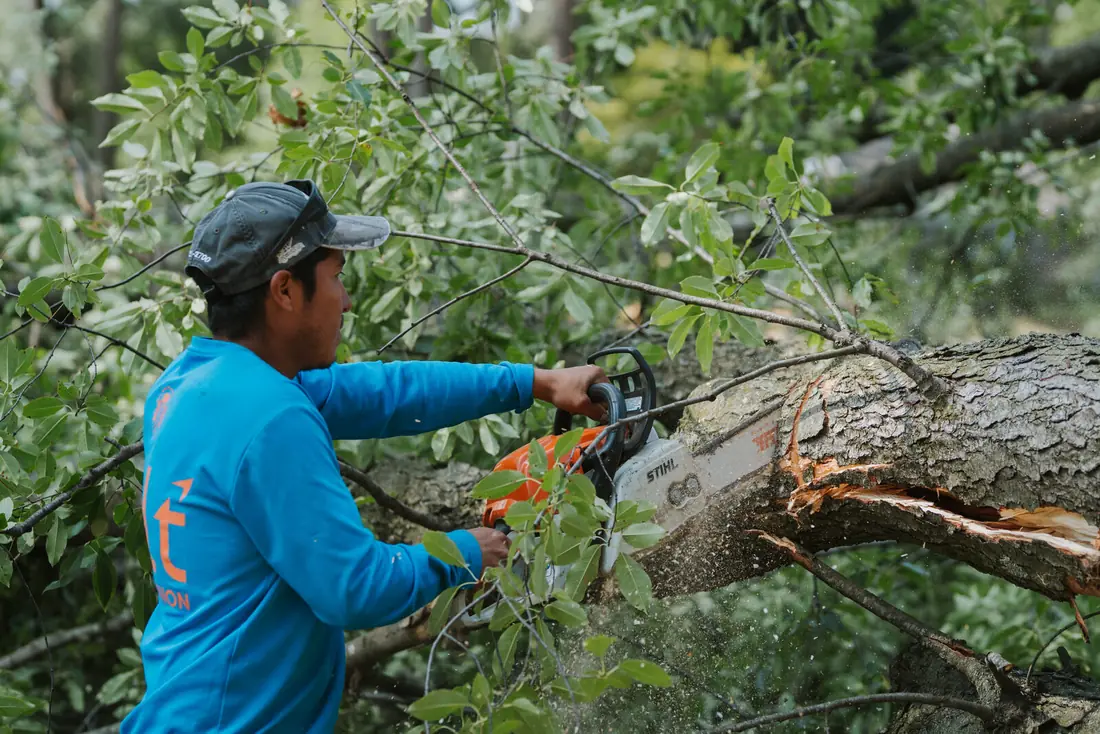
A heavy limb cut in a single pass from the top will start to fall before the cut is finished, and it will rip a strip of bark down the trunk as it goes. That tear is often a far bigger wound than the cut itself.
What to do instead: use the three-cut method. First, cut about a third of the way up through the underside of the branch, a foot or so out from the trunk. Second, cut down from the top a little farther out than the first cut, so the branch drops cleanly. Third, remove the remaining stub with a final cut just outside the branch collar.
Mistake 4: Taking Too Much at Once
Leaves are how a tree feeds itself. Removing a large share of the live canopy in one visit forces the tree to live on stored reserves while it regrows, and it often responds with a flush of weak sprouts. Most arborists work well within a quarter of the live canopy in a single season on a mature tree, and far less on a stressed one.
What to do instead: if a tree needs a lot of corrective work, spread it over two or three years.
Mistake 5: Lion-Tailing
Lion-tailing is stripping out all the small interior branches and leaving foliage only at the ends of long limbs. It looks tidy from the ground, but it moves the weight out to the tips, where the wind catches it, and removes the small branches that dampen movement in a storm. It can also expose bark that was shaded to sunscald.
What to do instead: when thinning a canopy, remove selected branches evenly throughout the crown, not just the inner ones.
Mistake 6: Pruning Oaks in Spring or Early Summer
In Michigan, this one has a date on it. The DNR identifies April 15 to July 15 as the high-risk period for oak wilt, when sap-feeding beetles carry the fungus to fresh wounds, with peak risk in May and June. Red oaks, black oaks, and pin oaks are the most vulnerable, and an infected red oak can die within weeks and pass the disease to neighboring oaks through connected roots.
What to do instead: prune oaks only while they are dormant, ideally in winter. If an oak is wounded during the risk period by a storm, a mower, or construction, the DNR advises immediately covering the wound with tree-wound paint or latex paint.
Mistake 7: Painting Every Wound
Outside of that oak exception, wound dressings generally are not needed. Trees seal off wounds on their own, and the Morton Arboretum's guidance focuses on making the cut correctly rather than covering it. A good cut in the right place does more than any product can.
Mistake 8: Working Near Power Lines or From a Ladder
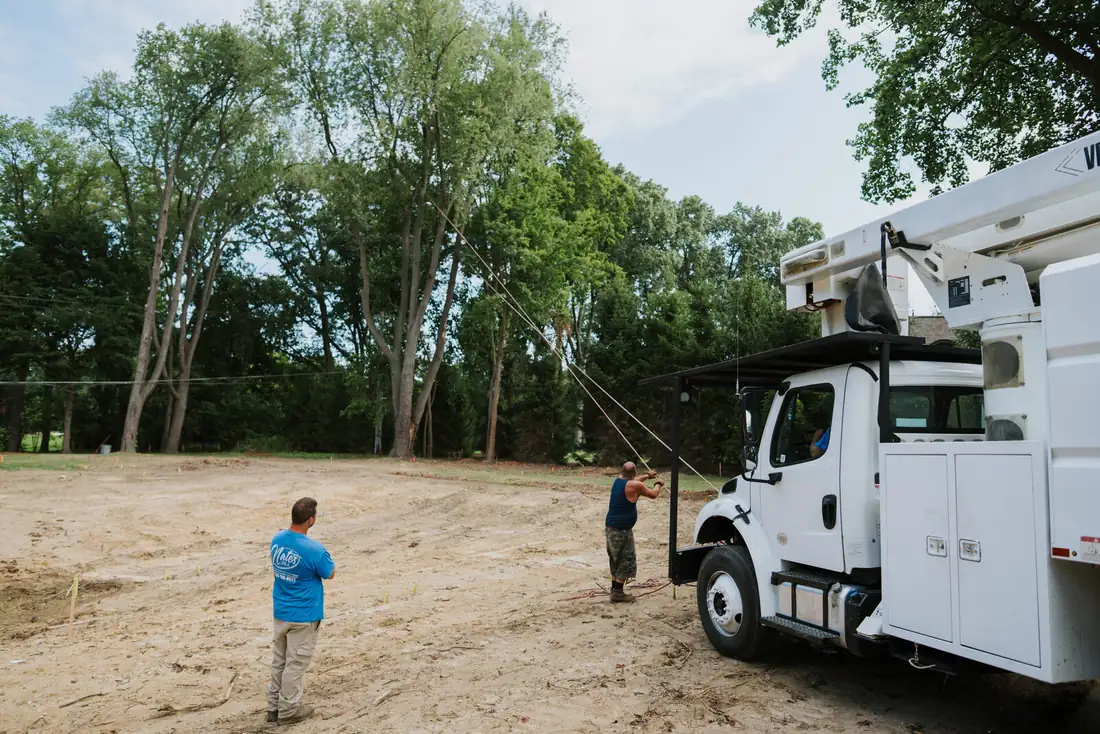
DTE Energy urges homeowners planning to trim anywhere near power lines to hire a professional tree service, because pole-to-pole lines carry voltages that can cause serious or fatal injury. A branch or a pole saw does not have to touch a line to be dangerous; electricity can arc across a gap.
Ladders are the other common injury. A limb that swings or springs back when cut can knock a ladder out from under you, and running a chainsaw overhead from a ladder is one of the riskier things a homeowner can do. If you cannot reach it from the ground with a hand pruner or pole pruner, it is a job for a crew.
Mistake 9: Ignoring Young Trees
The most valuable pruning a tree ever gets happens in its first several years in the ground. Choosing one strong central leader, removing competing leaders, and spacing out the main branches while they are small takes minutes with a hand pruner. Fixing the same problems on a 40-foot tree takes a crew, a bucket truck, and large cuts.
What to do instead: after a new tree has had a couple of seasons to establish, prune it lightly for structure every few years. Leave the lower branches on for now, since they help the trunk thicken, and remove them gradually as the tree grows.
When to Call a Professional
Small branches you can reach from the ground on a young tree are good homeowner work. Anything near wires, anything requiring a ladder or chainsaw overhead, any oak in the spring, and any large limb over a house or driveway is not.
We prune for structure, clearance, and health across Southeast Michigan, and we will tell you when a tree needs less work than you expected. Free estimates across Livonia and all of Southeast Michigan. Call (734) 788-8822.
— Related Services —
— Keep Reading —