Trees and Solar Panels in Michigan: Trim, Remove, or Rethink the Roof
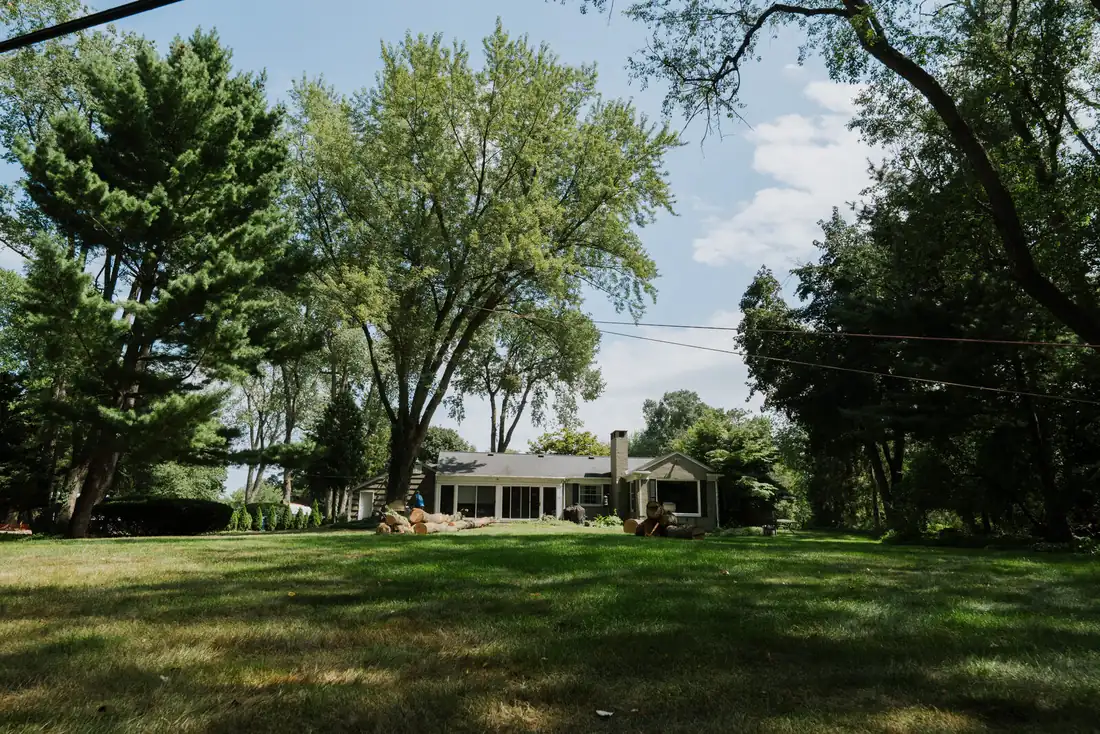
Rooftop solar and big shade trees want the same thing: the south side of your house. In Southeast Michigan, where mature maples and oaks shade a lot of older neighborhoods, that conflict comes up every time someone gets a solar quote. The easy answer is to cut everything that casts a shadow. Sometimes that is right. Often it is not, because those trees are also cooling your house, and sometimes the honest answer is that the roof is the wrong place for panels. Here is how shade actually affects a system, how Michigan's sun angles change the picture by season, and how to sequence tree work and solar so you only do each once.
— Quick Points —
- Partial shade costs more than its size suggests on a standard string system. Microinverters and optimizers reduce that loss but do not eliminate it.
- Get a professional shade analysis from your solar installer before cutting any tree. It tells you which trees actually matter.
- Do the tree work before the panels go on. It is safer, easier, and nobody is lowering limbs over a new array.
Why a Little Shade Can Cost a Lot
Solar panels are wired together, and on a traditional string inverter system, the panels in a string work as a group. Shade on part of one panel can drag down the output of more than just that panel. That is why a shadow from one branch can matter more than its size would suggest.
Module-level electronics, meaning microinverters or power optimizers on each panel, were developed partly to deal with this. A 2012 study by researchers at the National Renewable Energy Laboratory tested a microinverter system against a standard string inverter system under light, moderate, and heavy shade. The microinverters recovered roughly 40 to 50 percent of the energy lost to shade. That is a meaningful improvement, but it also means the other half of the loss remained. Better equipment helps. It does not make a shaded roof unshaded.
Michigan's Sun Is Low in Winter and High in Summer
Southeast Michigan sits at roughly 42 degrees north latitude. That puts the noon sun at only about 24 degrees above the horizon around the winter solstice, and a bit over 70 degrees at the summer solstice. The difference in shadow length is dramatic. At that low December angle, a tree casts a noon shadow a little more than twice its height, so a 40-foot tree to the south can shade something nearly 90 feet away. In June, the same tree's noon shadow is short and falls close to its trunk.
The American Solar Energy Society makes the same point in its guidance on trees and arrays: the sun's altitude sets the length of a shadow, and its compass direction sets where the shadow falls. Trees to the southeast and southwest of an array tend to have the most impact, because they shade the panels during productive morning and afternoon hours.
The practical takeaway is that a tree that looks harmless in summer may shade the roof for months in winter, and a tree that barely matters in winter may block the high summer sun if it towers right next to the house. Short winter days mean Michigan systems rely heavily on the long days from spring through summer, so shade in those months usually costs more.
Deciduous vs. Evergreen Shade
Deciduous trees drop their leaves, which helps a little in winter when the sun is low. Bare branches still cast some shade, just less than a full canopy. Evergreens like spruce and pine block light all year, so a tall evergreen to the south or southwest of a solar roof is often the first tree an installer flags.
The American Solar Energy Society suggests that deciduous trees placed to the east or west can block harsh summer sun while limiting winter shading, as long as they are far enough from the array. That is a useful principle if you are planting new trees around a solar home. Our post on the trees to plant in Michigan covers species that suit smaller spaces.
Your Shade Trees Are Also Doing a Job
Before cutting a large tree for panels, it is worth remembering what it is doing now. The U.S. Department of Energy's guidance on landscaping notes that air under trees can be as much as 25 degrees cooler than air over nearby blacktop, and that shading an air conditioner can raise its efficiency by as much as 10 percent. DOE specifically recommends tall deciduous trees on the south side of a house for summer roof shading.
That is exactly the tree a solar installer wants gone. There is no universal right answer. If a large, healthy oak is shading most of your south-facing roof, removing it trades a real cooling benefit, plus the tree itself, for solar production. Some homeowners make that trade. Others decide the tree is worth more to them. Either is reasonable, but it should be a decision, not an afterthought.
Get the Shade Analysis Before Anyone Cuts
Any serious solar installer will do a site assessment that models shading across the year. The Department of Energy's guidance for homeowners planning a system says contractors will help evaluate shading, and it also reminds you to consider your own and your neighbors' trees that are still growing and could shade the system in the future.
Ask the installer for the shade report, and ask them to tell you which specific trees cause most of the loss. Often it is one or two trees, or a few limbs on one side of a canopy, not the whole tree line. The American Solar Energy Society's worked example found that a 50-foot tree 55 feet from an array cost about 2.6 percent of annual production. That is not nothing, but it is a very different conversation than removing a whole row of trees.
Bring that report to your tree estimate. It turns a vague request to cut back everything into a specific plan, and it keeps you from removing trees that were never the problem.
Trim or Remove
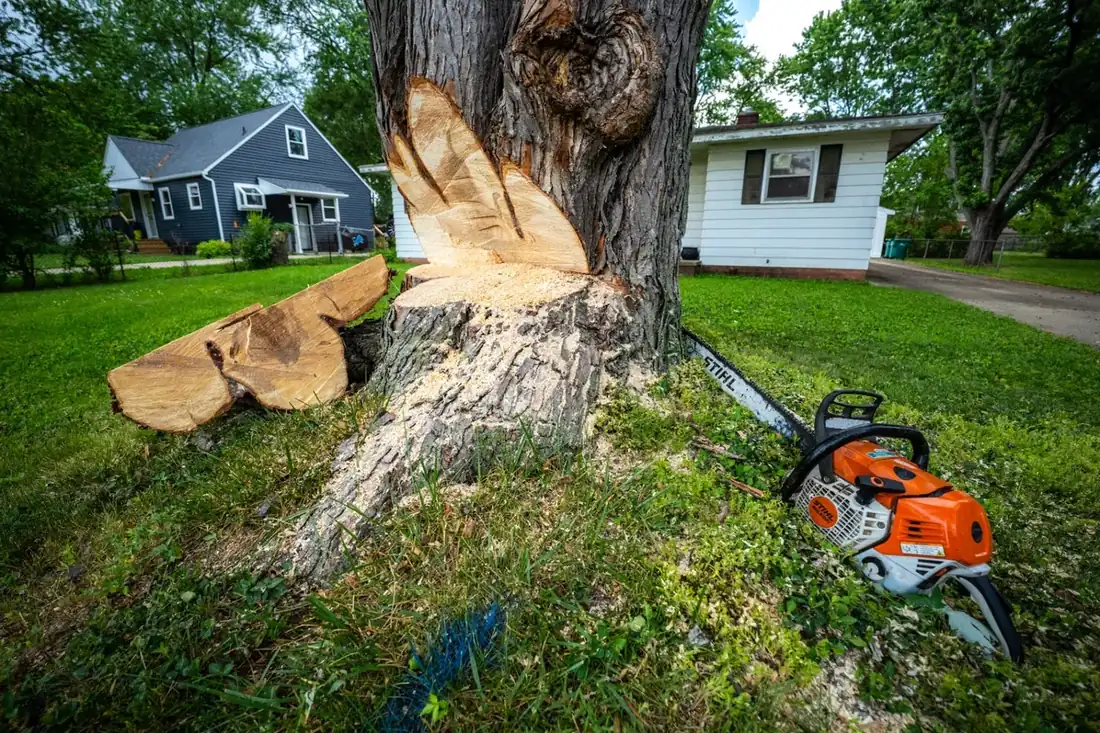
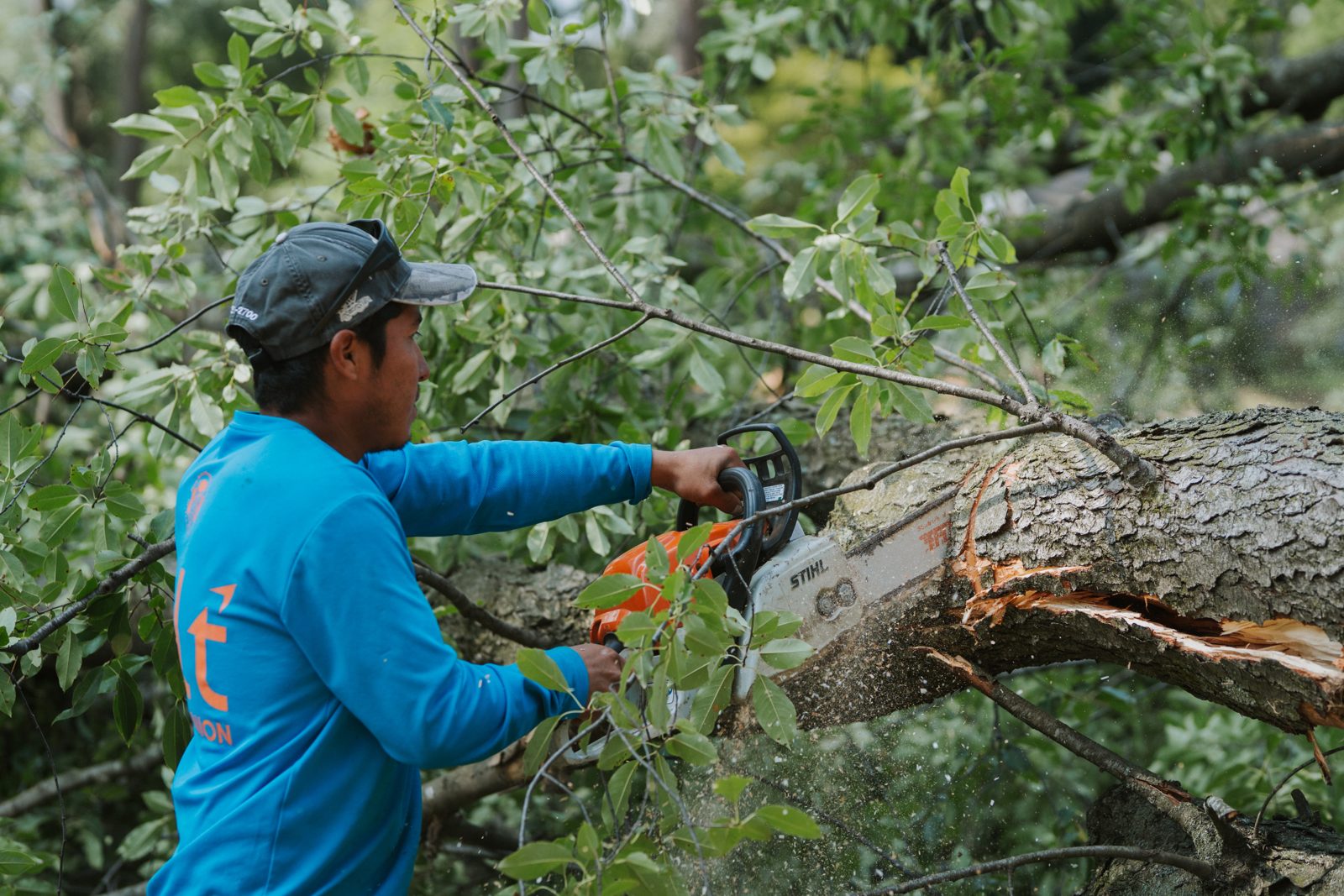
Sometimes targeted tree trimming solves most of the problem. Raising the lower canopy, reducing a limb that reaches over the roof, or thinning the side of a crown facing the array can open up the sun path without taking the tree. Proper reduction cuts back to a lateral branch. Topping a tree to get it under a sun line is not a fix. It weakens the tree, and the regrowth comes back fast and dense.
Removal makes sense when the tree is to the south and simply too tall for trimming to help, when it is an evergreen blocking light year-round, or when the tree has other problems like decay, a bad lean, or ash that is dead or dying from emerald ash borer. A tree that is already a hazard over the roof is a good candidate to come down before panels go up. Tree removal is also the only option when the shade source is a single large trunk.
Oaks and Permit Trees
If the tree shading your roof is an oak, timing matters. The Michigan DNR advises against pruning or wounding oaks from April 15 through July 15 because of oak wilt, and recommends doing oak work in winter when trees are dormant. Solar projects are often planned in spring for a summer install, so schedule oak trimming or removal for the preceding winter.
Some trees also need permission to remove. Many Southeast Michigan communities regulate removal of larger trees, certain species, or trees in the city right-of-way, and a street tree shading your roof almost certainly belongs to the city. Check with your city before planning around it. Our post on tree removal permits in Southeast Michigan covers what to look for.
Do the Tree Work Before the Panels Go On
The order matters. Trimming or removing trees over a bare roof is routine work. Doing the same job over a new solar array means every limb has to be rigged and lowered with extra care, because a dropped branch can crack a panel or damage the racking. It can also be harder to access parts of the roof, and some solar warranties or installation contracts have conditions about damage, so check yours.
Get the shade analysis, schedule the tree work, and let the installer mount the system on a roof that is already clear. If your roof itself is near the end of its life, the Department of Energy also suggests considering a roof replacement before installing solar, so the panels are not removed and reinstalled a few years later.
Branches That Can Fall on the Array
Shade is not the only tree issue for a solar roof. A tree that overhangs the house can drop dead limbs in a windstorm or snap under ice. That was a risk to shingles before, and it is a more expensive risk to panels. Before the install, have dead wood and weak limbs over the roof removed, even on trees that are not casting much shade. After the install, keep an eye on those trees and deal with dead branches before they fall.
When the Answer Is Not This Roof
Sometimes the honest conclusion is that the roof is the wrong place for solar. If the only south-facing roof plane sits under several large, healthy trees you want to keep, or under trees on a neighbor's property that you cannot change, the numbers may not work. The American Solar Energy Society's example showed that moving an array can reduce shade losses without removing trees, and a ground-mounted array in an open part of the yard is an option some Michigan homeowners use. Community solar programs, where available through your utility, are another route.
We are happy to trim or remove trees for a solar project, but we would rather you make that call with the installer's shade report in hand than lose a good tree for a small gain.
Planning Solar Around Your Trees?
Send us your installer's shade report or walk the yard with us, and we will tell you which trees can be trimmed, which need to come down, and when the work should happen. Free estimates across Livonia and all of Southeast Michigan. Call (734) 788-8822.
— Related Services —
— Keep Reading —